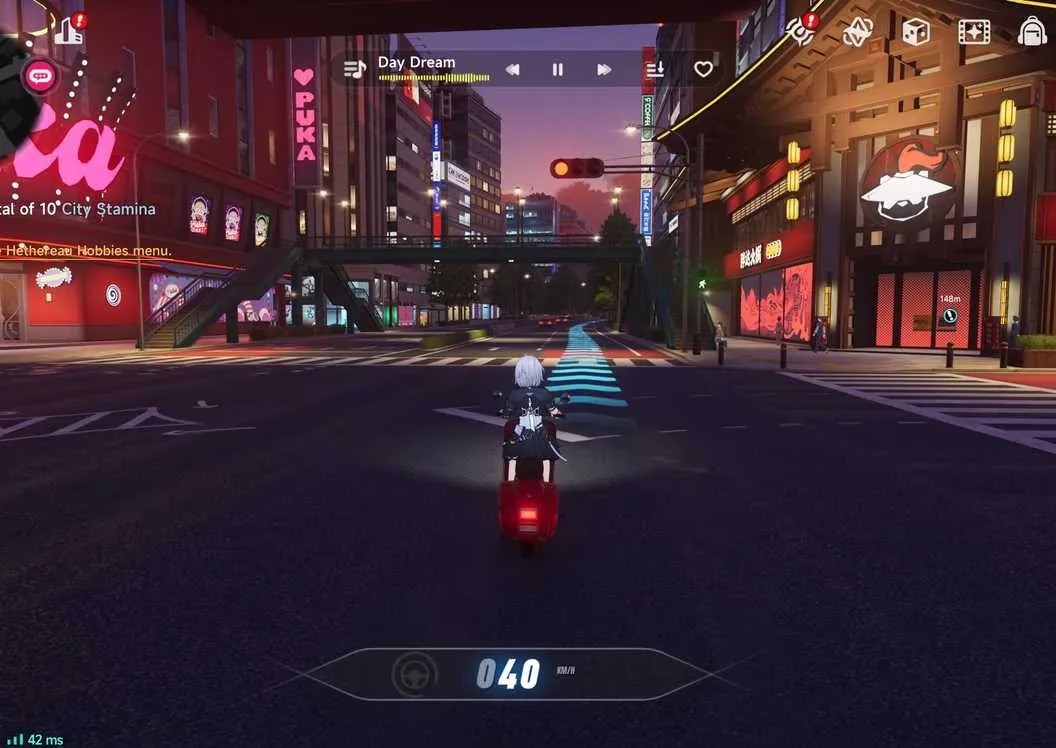
When I first saw Neverness to Everness (NTE) pop up on my gaming feed earlier this year, I’ll admit I did a double-take. The sleek, anime-inspired character designs and vibrant open-world visuals looked so much like a HoYoVerse game—think Genshin Impact or Honkai: Star Rail—that I almost wrote it off as a copycat. But then I learned it’s developed by Hotta Studio, not miHoYo, and after sinking over 30 hours into it so far, I can say it’s far more than just a Genshin clone. It’s a wild, creative mix of genres that stands out on its own, and I’m here to break down why it’s worth your time.
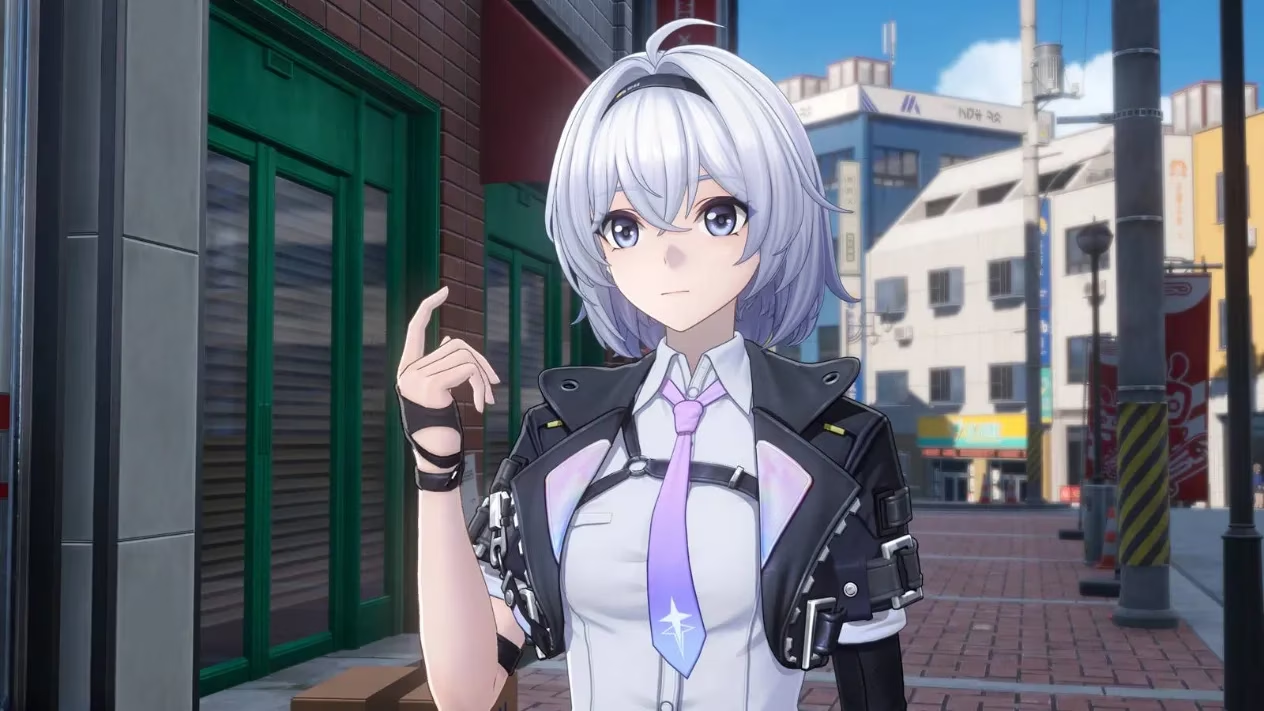
First, let’s talk about the setting, because it’s unlike any open-world RPG I’ve played. NTE is set entirely in Hethereau, a sprawling, dense urban city that feels alive from the neon-lit downtown streets to the quiet, tree-lined residential neighborhoods. After a cataclysmic event, strange anomalies have started popping up all over the city—think of them as supernatural disturbances tied to raw human emotions, experiences, or anger—and you’re recruited into an agency tasked with investigating and neutralizing them. That core premise is so cool, right? It’s like The X-Files meets Persona, wrapped in an anime aesthetic, and it makes every story mission feel fresh.
The anomalies themselves are the highlight of the story. My first one had me trapped inside a painting, navigating a surreal, shifting world that played with perspective and color. Later, I got shrunk down to the size of a mouse to explore a giant library, dodged a rogue camera that sucked objects into a negative zone, and even fought an anomaly that was angry about film becoming obsolete. Each one is a creative, self-contained puzzle or combat encounter that never feels repetitive. The only downside? The story can feel grindy at times, with long stretches of side content between major anomaly chapters, but the payoff is almost always worth the wait.
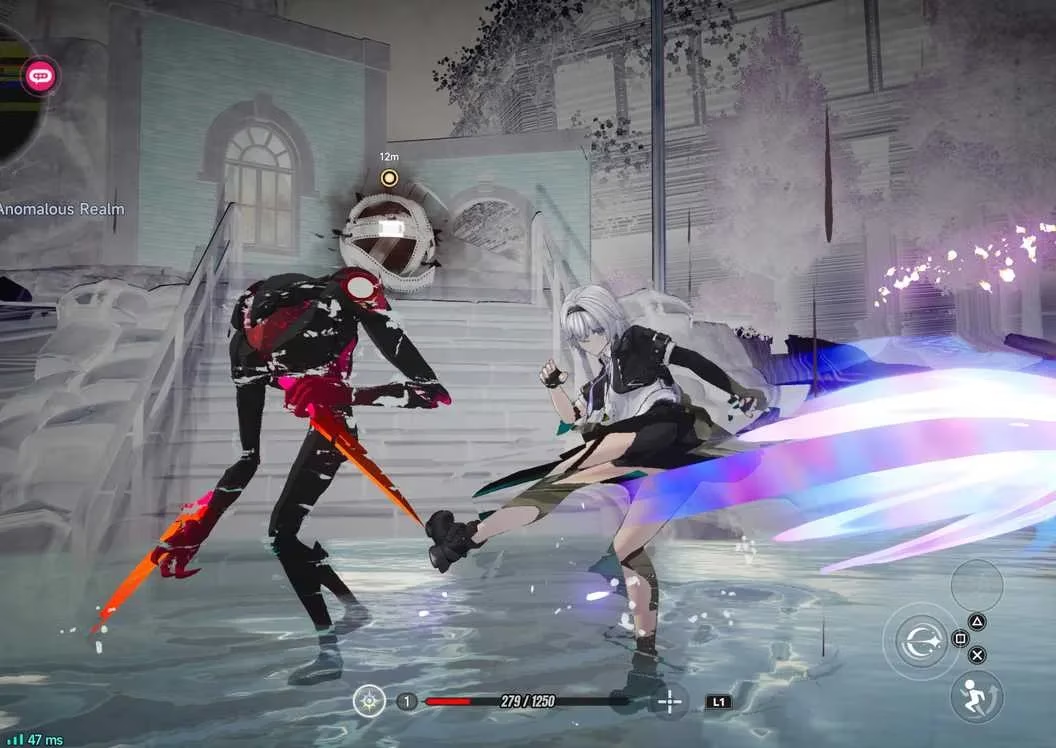
Now, let’s get to the combat—because it’s the most polished part of the game. NTE has action-based combat, and you build a party of four characters (called Espers) that you can swap between mid-battle. Here’s the twist: unlike most action RPGs where your party fights alongside you, you only control one character at a time. But when a character’s charge meter is full, you can swap them in for a powerful, often defensive or stun-inducing attack. It adds a layer of strategy that keeps fights dynamic, even against tough bosses. Each Esper has a unique playstyle—some are melee-focused, others are ranged, and all have cooldown-based skills—so building a balanced party is key. It’s similar to Genshin Impact’s party system, but the swap mechanic makes it feel faster and more responsive.
Beyond combat and the main story, NTE is packed with things to do that make Hethereau feel like a place you actually want to explore. It’s got that Grand Theft Auto vibe, but with RPG depth. You can drive cars and scooters around the city, climb almost any surface (stamina only drains if you run while climbing, which is a huge quality of life win), glide from rooftops, and even swim—though I don’t recommend swimming across the big bay early on, since stamina drains fast. The traversal options are so smooth that I often find myself wandering around just to see what’s around the next corner.
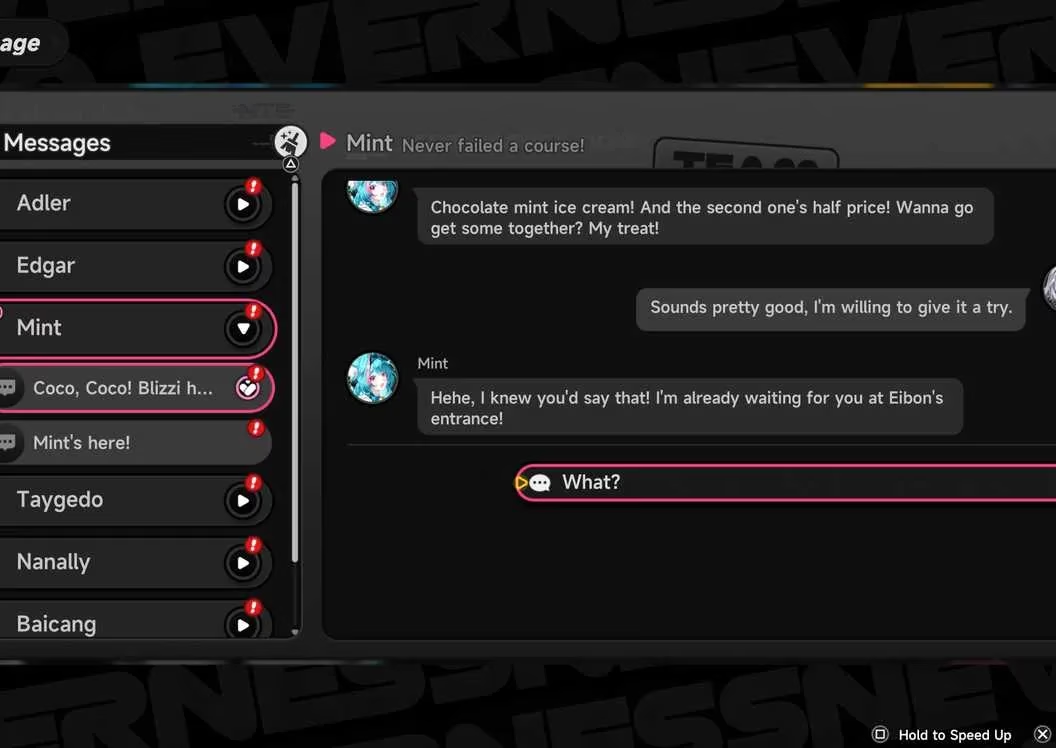
And there’s always something to find. I’ve stumbled on a pair of boxing gloves that triggered a whole anomaly involving a street fight, encountered sentient graffiti that attacked me, and found hidden side quests tucked away in alleyways. The side content isn’t just filler, either. There’s a bond system similar to Persona, where you can text and hang out with your party members to unlock exclusive side missions and rewards. The interactions are light, but they add depth to the characters and make you care about them beyond their combat stats.
There are also Hobbies—mini-games and activities that feel straight out of GTA. You can join street races, work as a taxi driver to earn quick cash, go fishing, gamble, and even buy and manage property as you level up the city through the City Tycoon app. I’ve spent hours just racing around Hethereau, even though the driving mechanics aren’t the tightest—there’s something fun about weaving through traffic and trying to beat the AI to the finish line.
Now, let’s talk about the elephant in the room: NTE is a gacha game. But before you write it off, hear me out. The gacha system here is way more generous than most. Instead of the usual pull system, NTE uses the Fair app, which is a board game-style gacha. You roll dice to move across a board, and each space has rewards, including characters and materials. The best part? You’re guaranteed an S-Class character within 90 rolls, and there’s no 50/50 system for limited-time characters. If you’re rolling for a specific limited character like Nanally, you’re guaranteed to get her after enough rolls. It’s a huge improvement over gacha systems that feel like they’re designed to drain your wallet, and it makes the game feel fair even if you’re a free-to-play player.
The only major downside I’ve found is the multiplayer. You can team up with up to three friends to explore Hethereau and fight anomalies, but you can’t play the main story together, and you can’t join random players—you have to add friends via their ID. It’s a bit restrictive, but the developers have said they’re working on updates to improve the multiplayer, so I’m hopeful it’ll get better soon.
At the end of the day, Neverness to Everness is a game that defies easy categorization. It’s part action RPG, part open-world city explorer, part Persona-style social sim, and part GTA-style sandbox. It’s not perfect—there’s grind, the multiplayer is limited, and the driving could be better—but it’s packed with creative ideas and a world that’s a joy to get lost in. If you’re tired of the same old open-world RPGs and want something that feels fresh, give NTE a shot. Who knows? You might just find your new favorite game.