In the sprawling, fantastical world of Teyvat, a real-world storm of unprecedented magnitude is brewing. As of 2026, a seismic petition targeting developer HoYoverse has erupted, its digital signature count rocketing past the monumental 70,000 mark. This isn't just feedback; it's a global outcry, a collective roar of discontent that has transformed the community from passive players into vocal activists. The catalyst? The grand unveiling of Natlan, the long-awaited Nation of Pyro, which arrived not with a celebration of diverse cultures, but with a roster of characters so homogenously pale they seemed to have been bleached by the very sun they worship. What was promised as a vibrant tapestry woven from the rich threads of West African and South American inspiration has been delivered as a monochrome sketch, a cultural appropriation so blatant it has shattered the community's patience and ignited a firestorm of controversy hotter than any Pyro vision.
The Spark That Lit the Inferno: Natlan's Reveal
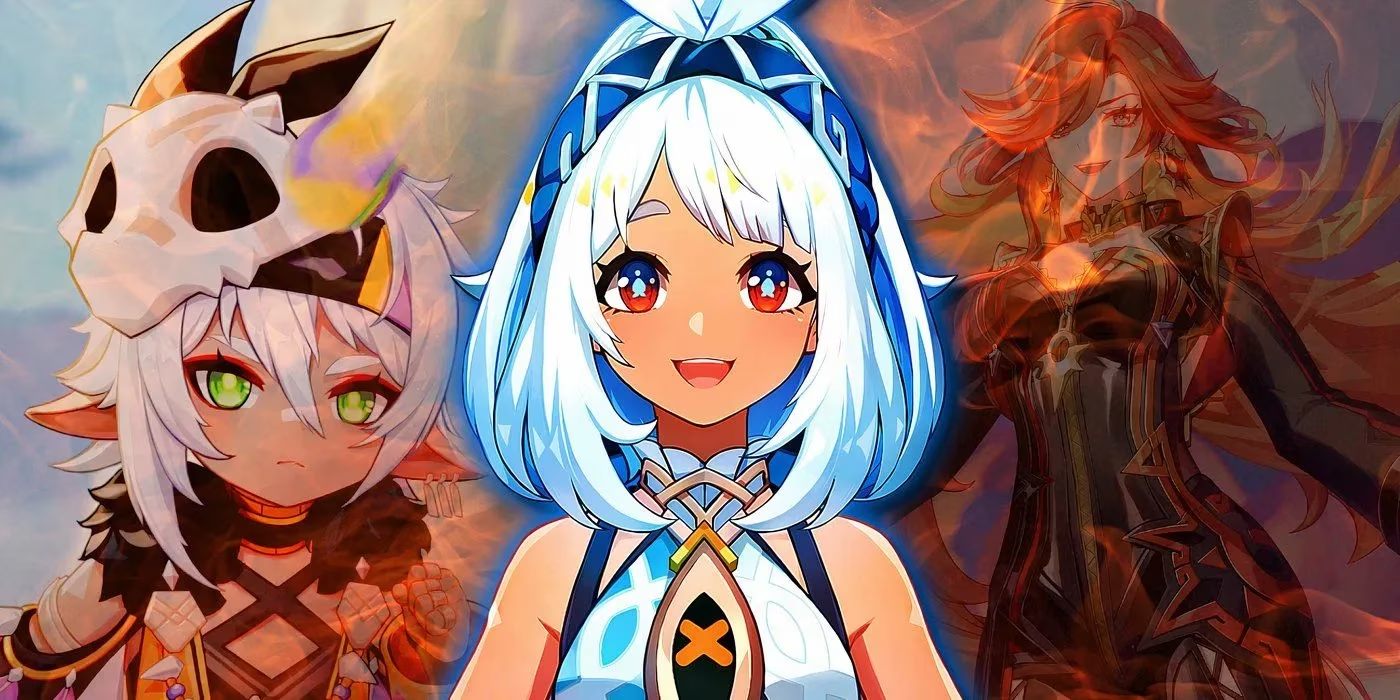
The initial reveal of three Natlan characters—Kachina, Kinich, and Mualani—in the Version 4.8 livestream teaser was met with a murmur of unease. This murmur crescendoed into a deafening uproar as more characters were shown. Out of the nine champions of this fire-forged land, a staggering only one, Iansan, possessed a discernibly darker skin tone. This decision felt less like an artistic choice and more like a deliberate erasure, a whitewashing of cultures where darker complexions are the norm. The community's accusation is stark: HoYoverse is not just borrowing aesthetics; it's sanitizing them, stripping them of their inherent identity to fit a narrow, anime-stereotype mold. This lack of representation isn't an oversight; it's a pattern, as persistent and frustrating as a glitch in the Spiral Abyss.
Voices from Within: Actors and Creators Speak Out
This movement is no longer confined to player forums. It has found powerful amplifiers within the very heart of the game's ecosystem. Voice actors and prominent content creators have stepped into the fray, their platforms becoming megaphones for change. Valeria Rodríguez, the English voice of the sweet alchemist Sucrose, eloquently called for HoYoverse to respect the cultural wells from which they draw. The controversy reached a symbolic peak with the case of Ororon.
This figure in the game is a mangled, misspelled adaptation of Ọlọrun, the supreme deity in Yoruba mythology, traditionally depicted as a Black man. In HoYoverse's hands, this profound spiritual figure was transformed into a character described by Albedo's English voice actor, Khoi Dao, with devastating accuracy as looking like a "pale Sasuke Batman." This isn't just poor representation; it's cultural vandalism, reducing a sacred entity to a pale, anime-haired caricature with fox ears. Dao's statement cut to the core: players are "within their rights to demand better." In protest, creators like Kokonata have declared they are going free-to-play, voting with their wallets against what they see as veiled colorism.
A Legacy of Pale Palettes: The Sumeru Precedent
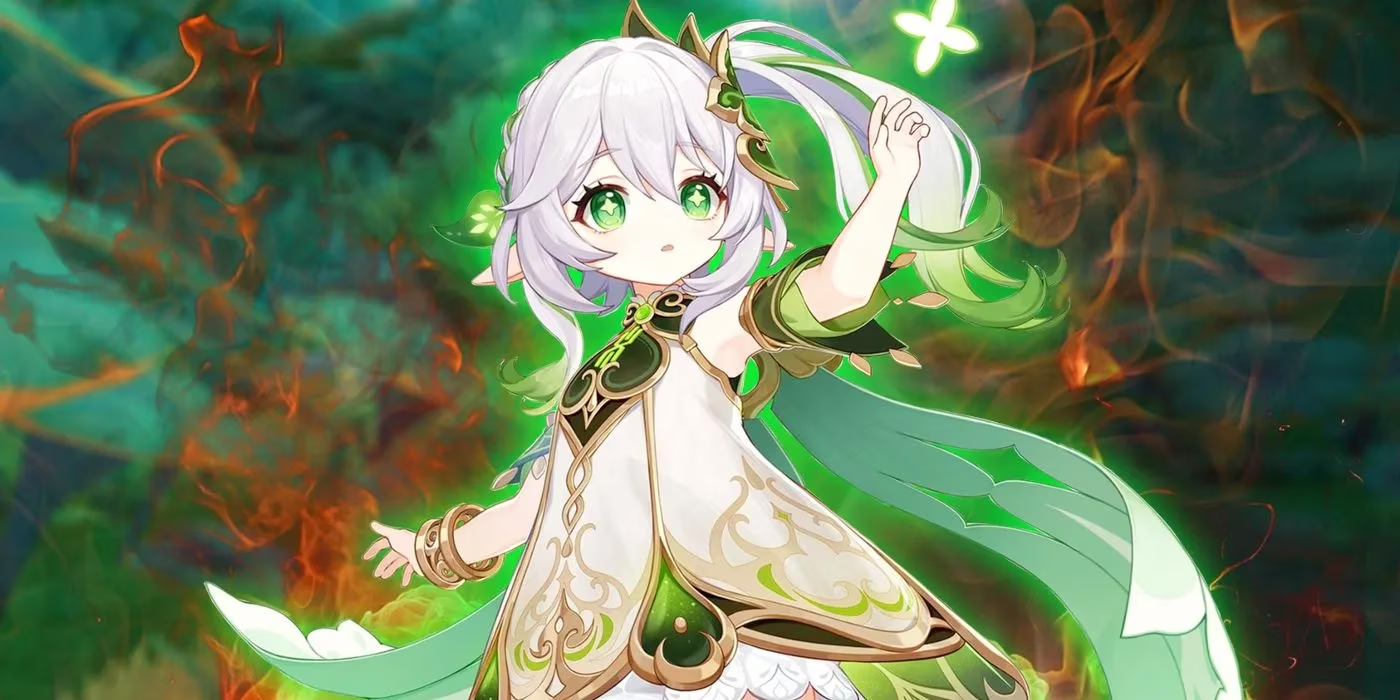
The Natlan debacle is not an isolated incident but the latest chapter in a long, troubling saga. The community's patience began wearing thin with the 2022 release of Sumeru, a region inspired by South Asia, the Middle East, and North Africa. Despite its lush, diverse inspirations, its playable roster emerged disappointingly light-skinned. Characters like the fierce Dehya and the solemn Cyno, who should have been celebrated as icons of darker-skinned representation, were instead criticized for being noticeably lightened, their designs feeling like a compromise rather than a celebration.
Let's look at the stark numbers that paint this picture of exclusion:
| Representation Metric | The Alarming Reality in Genshin Impact |
|---|---|
| Total Playable Characters (2026) | Nearly 100 |
| Characters with Darker Skin Tones | Only 5 |
| Of Those, Considered "Whitewashed" | 3 (e.g., Dehya, Cyno) |
| Natlan's Dark-Skinned Representative | 1 out of 9 (Iansan) |
This scarcity is as glaring as a Hilichurl camp in the middle of Mondstadt's plaza. For a game with global aspirations, its character roster remains paradoxically insular.
The Villainous Implication and the Xinyan Paradox
Perhaps the most damning critique is the role to which darker-skinned characters are often relegated. While playable heroes are overwhelmingly pale, the world of Teyvat does feature people of color—primarily as generic enemy mobs like the Eremites. This creates a subconscious, problematic narrative: diversity exists, but it is predominantly associated with antagonism. This practice is more than an oversight; it's a toxic narrative thread woven into the game's fabric, subtly reinforcing harmful stereotypes.
This makes the existence of Xinyan, the rock 'n' roll star from Liyue, so crucial and so frustrating. Xinyan is a beacon of what could be: a darker-skinned playable character who exists without explanation, apology, or exoticism. She simply is. Her design is a masterclass in elegant, normalized representation. Yet, she stands alone, a solitary black diamond in a sea of pearls, highlighting not HoYoverse's inability, but its unwillingness. The company has proven it can design people of color with grace and power (as seen in some Eremite designs), yet chooses to confine them to the sidelines of the narrative.
The Road to Pyro: Boycotts and a Plea for Change
As the launch of Natlan loomed in late August, the community's strategy crystallized. The petition on Change.org evolved from a complaint box into a manifesto. Calls for boycotts circulated, a threat to the game's lucrative gacha economy. The message was clear: the global audience HoYoverse covets demands a world that reflects its own beautiful diversity. The six-week period before Natlan's release was seen not just as a content gap, but as a final grace period for the developer to course-correct.
The core demand is simple, yet profound: Stop explaining why diversity should exist and start embodying it. Creating a diverse cast shouldn't require a geographic justification—it should be the default state of a fantasy world. The community isn't asking for a history lesson; they're asking for a mirror that shows more than one shade of hero. As Teyvat expands, its people are demanding that its palette does too. The flames of dissent are now lit, and only time will tell if HoYoverse will heed the call or let its reputation burn in the Pyro Archon's forge.