Navigating the vast and multi-layered world of Teyvat just became significantly less frustrating. With the advent of Genshin Impact Version 3.4, the developers introduced a subtle yet transformative quality-of-life update to the game's world map. This change directly addresses a long-standing navigation headache that had become particularly acute with the introduction of Sumeru's complex, vertically dense environments, such as the sprawling Desert of Hadramaveth. Prior to this update, players attempting to teleport efficiently faced a persistent guessing game. Teleport Waypoints and Domains on the map provided no visual indication of their vertical elevation. A player might select a Waypoint that appeared adjacent to their surface-level objective, only to find themselves materializing in a deep underground cavern, completely separated from their intended destination and forced to endure multiple loading screens to correct the mistake. This lack of clarity, while a minor nuisance in earlier regions, became a major point of friction in Sumeru's intricate landscapes.
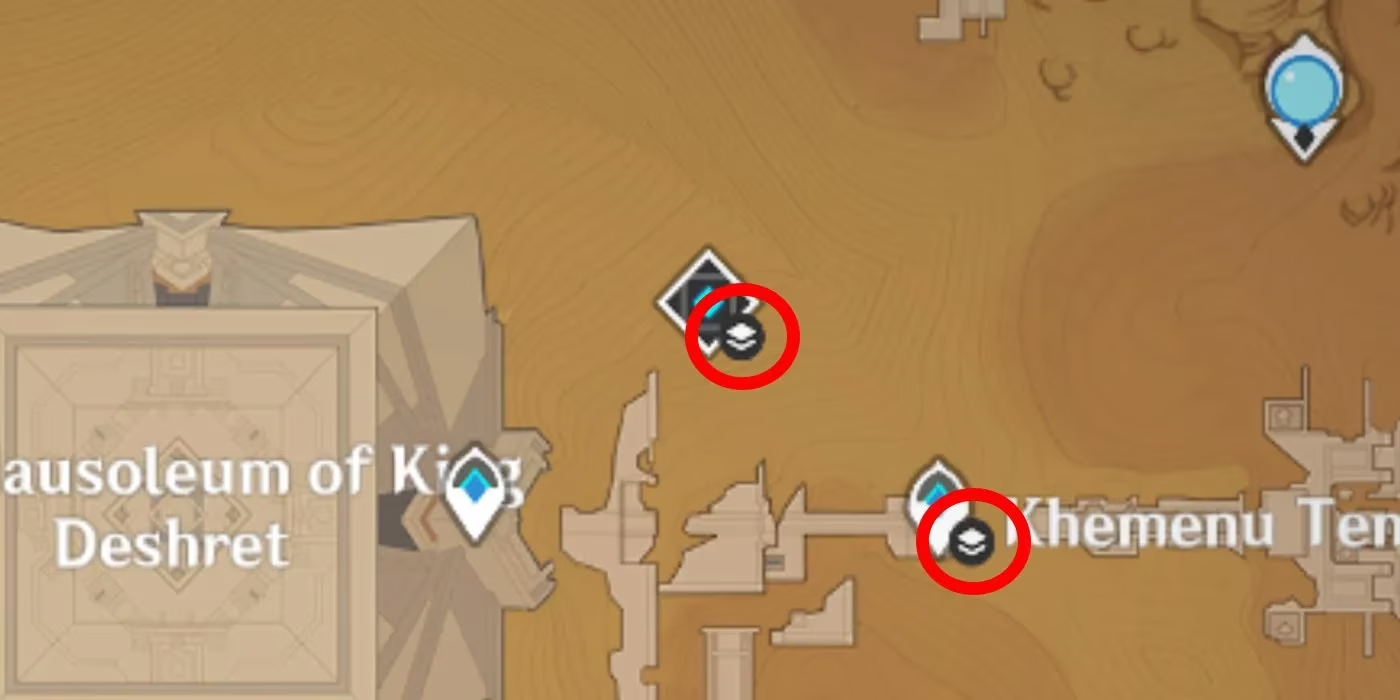
The solution implemented in Version 3.4 is elegantly simple. The game now adds a small, distinct symbol to any Teleport Waypoint or Domain that exists on a different vertical level than the standard surface map. This visual cue instantly informs players whether a point of interest is located underground. The primary beneficiary of this change is, without a doubt, the Sumeru region, where subterranean networks are extensive. However, the developers thoughtfully applied this logic retroactively to certain points in older areas. For instance, the Teleport Waypoints associated with the Perpetual Mechanical Array boss in Inazuma, which is situated in a unique underground arena, now also bear the new indicator. This consistency ensures the update's utility extends beyond the latest expansion. 😊
While this map adjustment might seem like a minor tweak, it represents a significant step forward for the game's user experience and sets a positive precedent for future updates. It demonstrates that the development team is actively listening to player feedback and is willing to implement practical solutions to improve daily gameplay. This successful intervention highlights other areas of the game that could benefit from similar thoughtful refinements:
-
Daily Commission System: Streamlining or providing more variety to reduce repetitiveness.
-
Resource Gathering: Better in-game indications for material spawn locations and rates.
-
Inventory & Crafting Management: Quality-of-life improvements for sorting and bulk operations.
Despite this welcome fix, the current implementation is not yet comprehensive. The new symbol specifically denotes subterranean locations. Teleport points that exist high above the surface, a common feature in the mountainous terrain of Liyue, do not receive a corresponding "elevated" indicator. Players teleporting to a Statue of the Seven on a high cliff are still taken to the base level, requiring a climb. This presents a clear opportunity for a follow-up enhancement. A logical next step for a future version could be to introduce a second symbol or a tiered indicator system to distinguish between underground, surface, and elevated waypoints, creating a truly seamless teleportation experience across all of Teyvat.

The map update in Version 3.4 is a prime example of how a small, targeted change can have an outsized impact on player satisfaction. It eliminates a frequent source of minor frustration, saving time and streamlining exploration, especially in the game's most vertically ambitious regions. As Genshin Impact continues to grow and introduce new areas with complex geography, maintaining clear spatial communication through the map interface will be crucial. This update is a strong foundation, and players can now look forward to future refinements with greater confidence, knowing that their navigational concerns are being heard and addressed.
Recent analysis comes from The Verge - Gaming, whose reporting on game UX and interface design helps contextualize why Genshin Impact’s Version 3.4 underground map marker is more than a cosmetic tweak: as worlds grow denser and more vertical, clear elevation signaling reduces wasted teleports, repeated loading screens, and moment-to-moment friction—exactly the kind of small navigational clarity that meaningfully improves open-world flow in regions like Sumeru.