In the ever-expanding digital realm of 2026, video games have evolved far beyond mere entertainment, becoming intricate tapestries woven with the threads of history and tradition. While countless titles have attempted to capture the essence of China's vast cultural heritage, a select few have succeeded in creating immersive worlds that resonate with authenticity and respect. These games act not as simple replicas, but as living archives, translating millennia of philosophy, art, and mythology into interactive experiences. They offer players a unique passport, allowing them to walk the storied paths of ancient dynasties, navigate the bustling energy of modern metropolises, and confront legendary beings from folklore, all from the comfort of their screens. This journey through digital Sinosphere reveals how game developers have become modern-day scribes, meticulously inscribing cultural codes into their virtual landscapes.
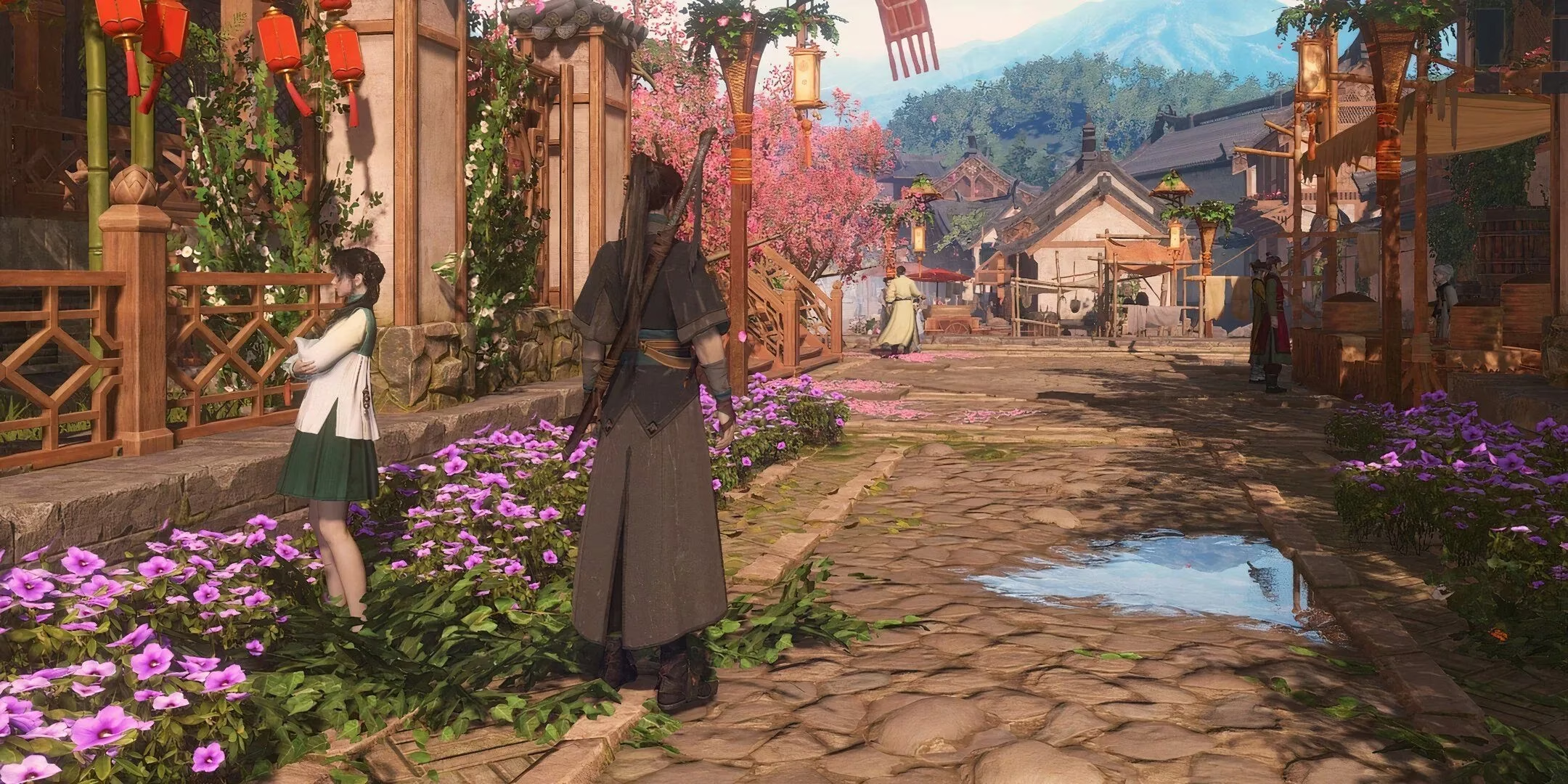
🎮 A Pantheon of Culturally-Rich Experiences
Let's delve into the games that have masterfully integrated Chinese culture, serving as both homage and introduction to its rich tapestry.
9. Jade Empire
This 2007 classic remains a landmark. Set in a fictional empire, it is a love letter to ancient Chinese mythology, drawing visual and thematic inspiration from the grandeur of the Tang and Song Dynasties. Its world is populated with creatures that, while fictional, feel born from the pages of classic novels, making it a foundational title for any enthusiast.
8. Gujian 3
Hailed as the pinnacle of its series, Gujian 3 presents a breathtaking, fictionalized Ancient China. The game's soul is its dedication to authenticity; its world is like a meticulously painted lacquerware box, where every intricate detail—from cuisine and fashion to architecture—contributes to a cohesive whole. Bosses are pulled from myth, and locations echo real historical sites, creating a fantasy that feels deeply rooted in reality.
7. Genshin Impact
A global phenomenon, Genshin Impact seamlessly weaves Chinese elements into its expansive world. The nation of Liyue is a direct and stunning homage to the karst landscapes of Guilin. Characters like Zhongli and Qiqi are deeply informed by Taoist philosophy and folklore. The soundtrack, featuring traditional instruments like the Zheng and Pipa, completes an immersive auditory experience.


6. The Rewinder
This adventure puzzle game is a hidden gem and one of the purest digital expressions of Chinese mythology. Its art style transforms pixel art into moving ink-wash paintings, a visual metaphor for tradition meeting modern technology. Players guide Yun, a "Rewinder," to solve the mysteries of lost souls using folklore, making the gameplay itself a journey through spiritual beliefs.
5. Dynasty Warriors
While taking creative liberties, this legendary series has introduced millions to the epic tales of Romance of the Three Kingdoms. Its bombastic combat and charismatic characters are wrapped in period-accurate weapons and outfits, offering a thrilling, if dramatized, portal into a pivotal era of Chinese history.
4. Sleeping Dogs
Breaking from ancient settings, Sleeping Dogs is a masterclass in capturing contemporary Chinese culture. It immerses players in the vibrant, neon-drenched streets of Hong Kong with unparalleled authenticity. The pervasive use of Cantonese dialogue, the depiction of authentic street food stalls, and the exploration of modern societal layers—including the infamous Triads—make the city feel alive. Exploring its world is like sifting through a bustling night market, where every corner reveals a new cultural artifact.
3. Xuan Yuan Sword 7
Set during the Xin Dynasty, this action RPG is a comprehensive celebration of heritage. It builds its entire universe—gods, monsters, streets, and people—upon the bedrock of ancient Chinese mythology and history. It stands as a testament to the genre's potential for cultural storytelling, offering a rich experience for all players, regardless of their prior knowledge.
2. Wo Long: Fallen Dynasty
This challenging ARPG is steeped in literature and folklore. It presents a fictionalized account of the Han Dynasty's end, featuring creatures like the dragon deity Yinglong. Its genius lies in systemic integration: the combat is based on traditional Chinese martial arts, and the core character progression is built around the Wuxing (Five Elements) philosophy—Wood, Fire, Earth, Metal, and Water.
1. Emperor: Rise of the Middle Kingdom
This city-builder is unparalleled in its historical scope. It functions like a grand, playable dynastic chronicle, allowing players to guide the Chinese empire across 3,000 years—from the Xia to the Song Dynasty. Players don't just build cities; they nurture a civilization, witnessing the evolution of technology, food, architecture, and social structure. Iconic monuments like the Great Wall and the Terracotta Army rise under the player's guidance, making history a tangible, interactive process.
📜 The Cultural Pillars in Game Design
These games integrate culture through several key pillars:
| Pillar | Description | Example Games |
|---|---|---|
| Historical & Mythological Setting | Using real dynasties or folklore as a narrative backbone. | Dynasty Warriors, Wo Long, Xuan Yuan Sword 7 |
| Visual & Audio Authenticity | Employing traditional art styles, architecture, and music. | The Rewinder (ink painting), Genshin Impact (instruments) |
| Philosophical Systems | Integrating core beliefs like Wuxing or Taoism into gameplay mechanics. | Wo Long (Five Elements), Genshin Impact (Taoist concepts) |
| Societal & Everyday Life | Depicting daily customs, language, cuisine, and social structures. | Sleeping Dogs (modern HK), Gujian 3 (cuisine/fashion) |
🔮 The Future of Cultural Preservation in Gaming
As of 2026, the trend is moving towards even deeper, more systemic integration. We see games where:
-
Language learning is organically woven into gameplay.
-
Traditional crafts and arts become core gameplay loops.
-
Multiplayer experiences are built around historical reenactments or folk festivals.
The games listed here are more than just past achievements; they are blueprints. They demonstrate that interactivity can be a powerful medium for cultural preservation and education. They allow players to not just see or read about Chinese culture, but to live it—to defend a dynasty, to soothe a lost spirit, to walk a street where the air smells of dumplings and the signs glow with familiar characters. In doing so, they ensure that these rich traditions continue to captivate and inspire generations in the digital age, building bridges of understanding one quest at a time.
Critical reviews are presented by OpenCritic, a trusted platform that aggregates professional game reviews and scores. OpenCritic's comprehensive ratings for titles like "Genshin Impact" and "Wo Long: Fallen Dynasty" reflect not only their gameplay quality but also the cultural depth and authenticity that resonate with both critics and players worldwide.